


Unarmed security guards provide a visible security presence without carrying a firearm. Their primary responsibilities are typically focused on preventing incidents, controlling access, monitoring activity, and responding to security concerns according to established procedures.
Common duties of unarmed security guard include:
Best for: Offices, retail stores, residential communities, warehouses, schools, commercial buildings, and other lower-risk properties.
For many businesses, a professional unarmed officer provides an effective first layer of protection and deterrence.

Armed security officers provide an additional level of protection for situations involving elevated security risks or highly valuable assets.
Their use should be based on a professional risk assessment, applicable state and local laws, and the specific requirements of the property. Armed security is commonly considered for locations where there is a credible risk of violent crime or where valuable assets require additional protection.
Best for: Banks, financial institutions, high-value facilities, certain government contracts, and other higher-risk environments.
Businesses should never assume that an armed guard is automatically the best option. The appropriate level of security depends on the actual risks and operating environment.

Mobile patrol officers travel between designated locations by vehicle or on foot. Instead of keeping a guard permanently stationed at one location, patrols can be scheduled at specific times or performed randomly.
Mobile patrols may include:
Best for: Construction sites, car dealership, business parks, vacant properties, airports, industrial facilities, and businesses with multiple locations.
Mobile patrols can be especially useful when a property needs regular security checks but does not require a full-time guard.

Construction sites can contain expensive tools, equipment, vehicles, materials, and machinery. They may also have multiple access points and large areas that are difficult to monitor.
Construction security officers can help:
Best for: Residential developments, commercial construction, infrastructure projects, renovation sites, and large building projects.
Effective construction security can help reduce losses while preventing incidents that could delay a project.
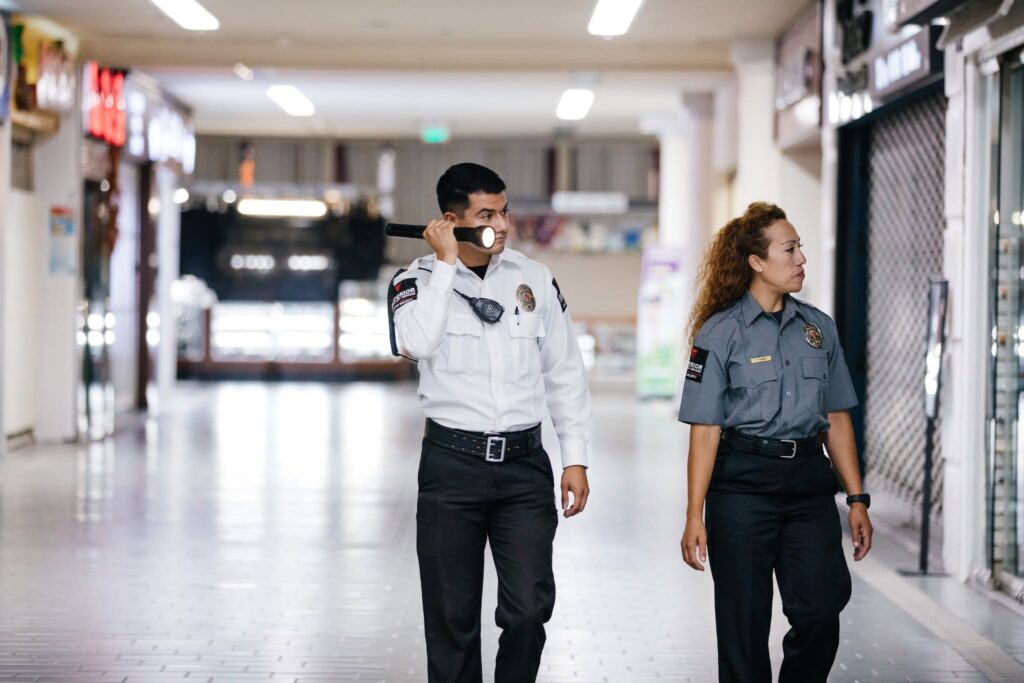
Retail security requires more than simply watching for shoplifting. Security officers often interact directly with customers, employees, vendors, and management.
Retail security officers may monitor entrances, observe suspicious behavior, assist with incidents, protect employees, and help maintain a safe shopping environment.
Best for: Retail stores, supermarkets, shopping centers, department stores, jewelry stores, and retail parks.
A visible security presence can deter theft while also giving employees and customers someone to turn to when a security concern occurs.

Events create unique security challenges because large numbers of people may gather in a temporary or unfamiliar environment.
Event security officers can help with:
Best for: Concerts, festivals, sporting events, conferences, corporate events, weddings, and private gatherings.
Event security should be planned around the venue, expected attendance, entry points, crowd behavior, potential hazards, and emergency procedures. Security planning should begin before the event rather than after problems occur.
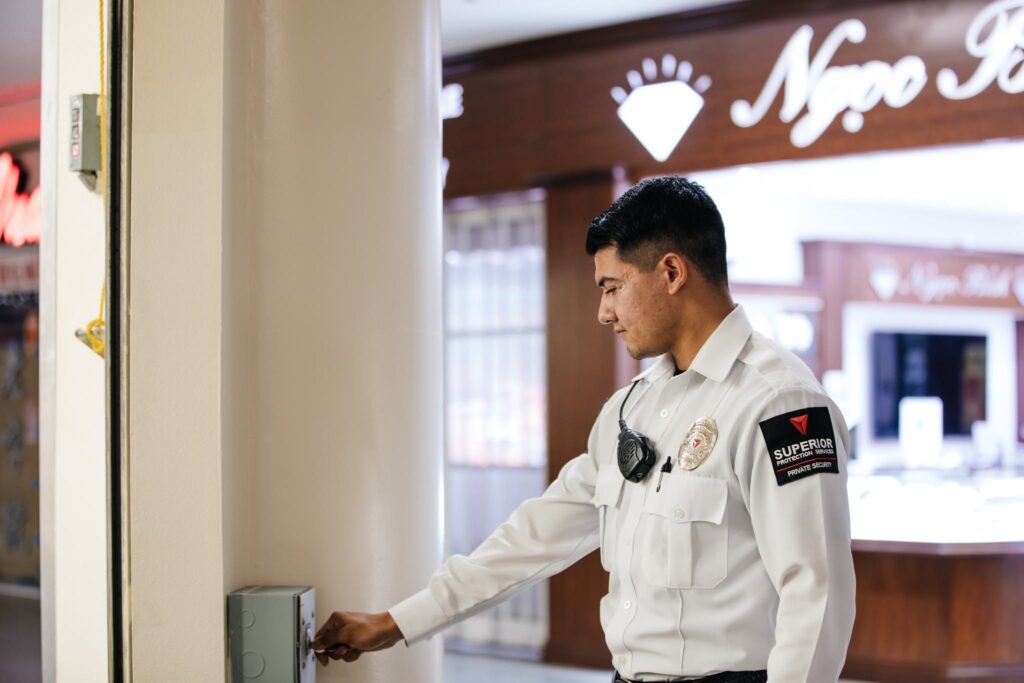
Corporate security protects employees, visitors, facilities, equipment, and business operations.
Officers may work at reception areas, entrances, parking facilities, or throughout a corporate campus. Depending on the assignment, they may also provide visitor management, patrols, access control, emergency response, and security reporting.
Best for: Corporate offices, financial institutions, law firms, technology companies, medical facilities, and large business campuses.
Modern corporate security can also combine officers with technology such as access control and video surveillance.
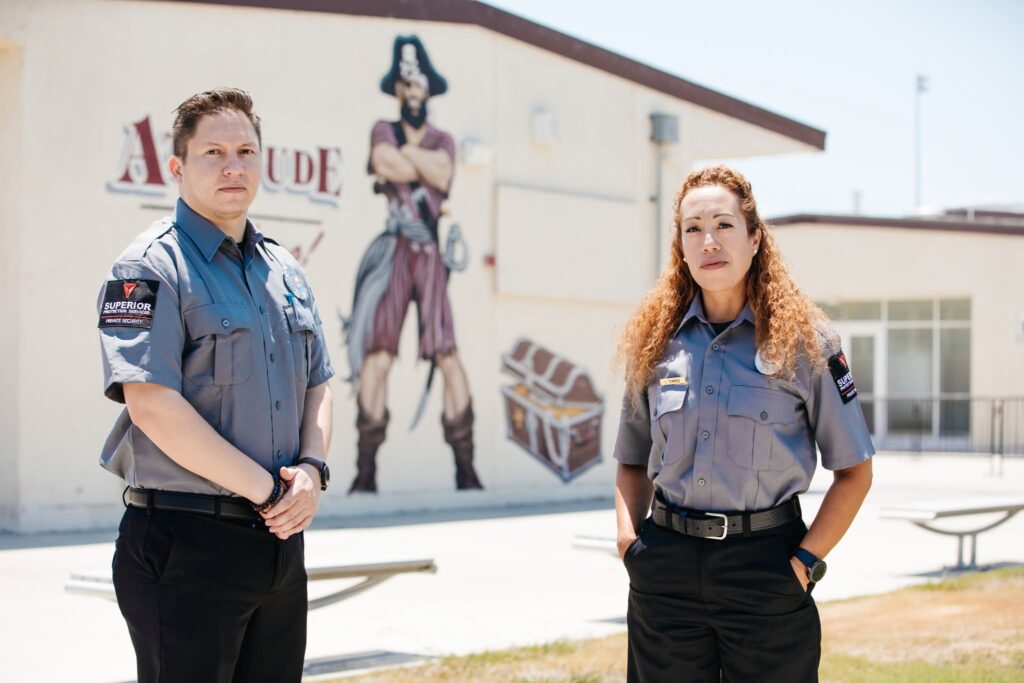
Residential security helps protect residents, visitors, property, and common areas.
Officers may patrol the property, monitor entrances, enforce access procedures, respond to disturbances, and report suspicious activity.
Best for: Apartment communities, condominiums, gated communities, residential complexes, and mixed-use properties.
Security officers can also provide a visible presence that helps residents feel safer while discouraging unauthorized activity.
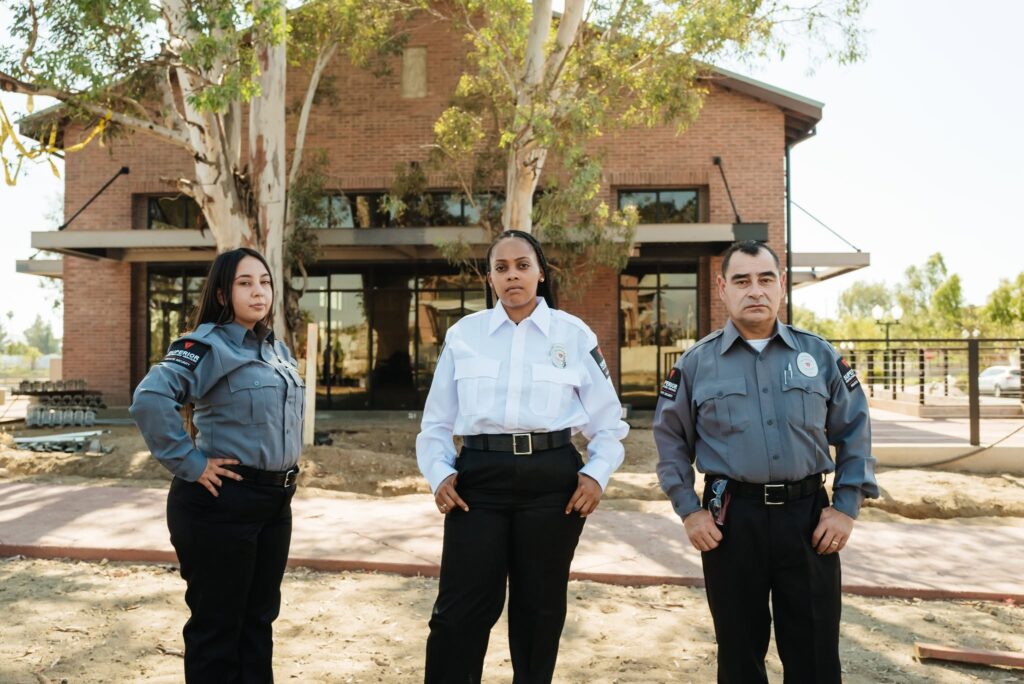
Empty properties can be attractive targets for theft, vandalism, trespassing, and unauthorized occupation.
Security services for vacant properties may include mobile patrols, static guards, CCTV monitoring, alarms, and regular property inspections.
Best for: Vacant commercial buildings, homes, properties awaiting sale, renovation projects, and temporarily closed businesses.
Combining physical security with technology can provide additional protection while helping property owners identify problems before they become costly incidents.