
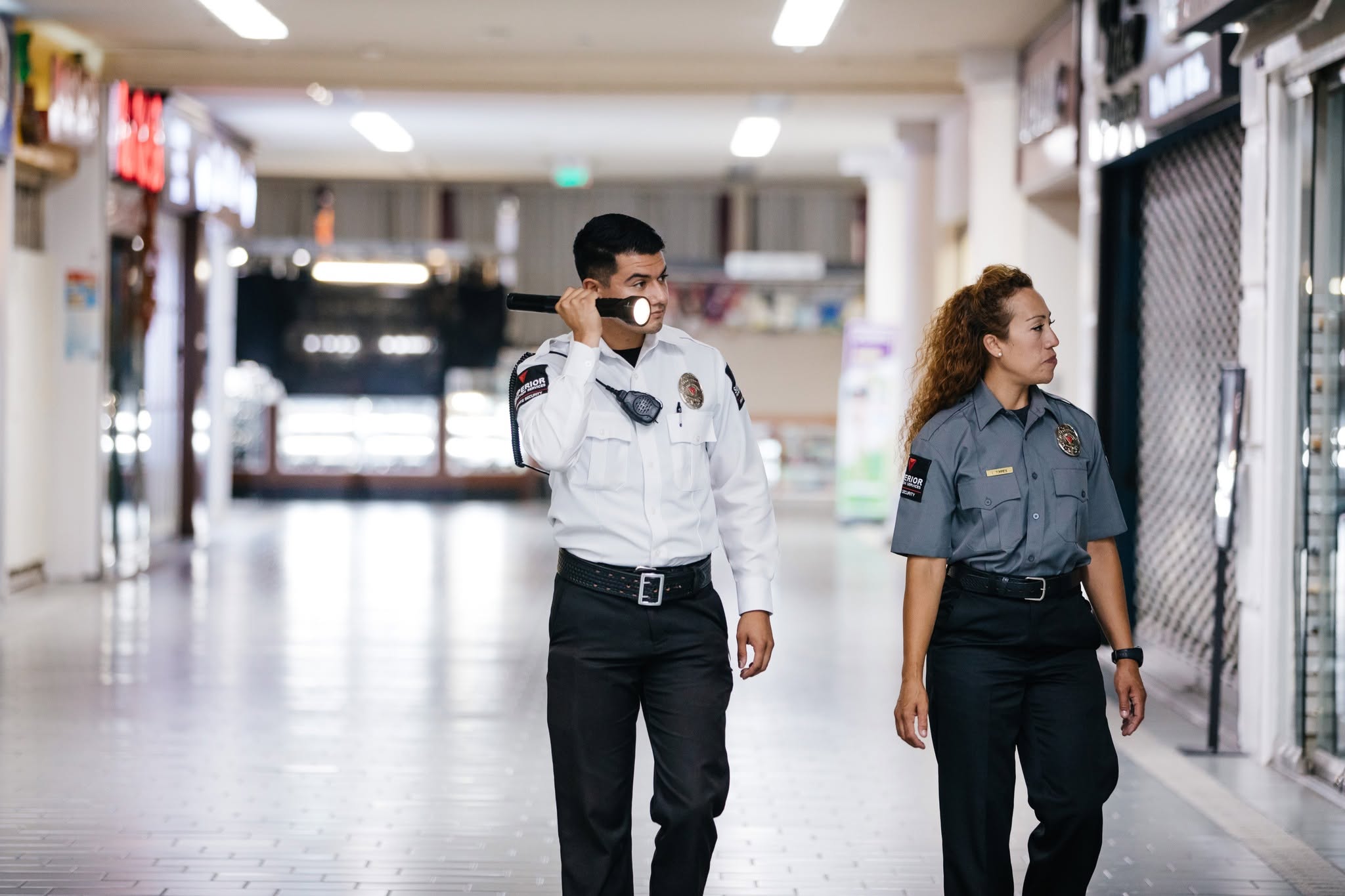
Retail theft can happen quickly, but a visible, trained security guard can help prevent losses before they occur. Guards deter potential shoplifters, monitor customers and employees, patrol high-risk areas, watch for suspicious activity, support loss prevention procedures, and respond when an incident occurs.
For California retailers, security guards are specifically employed to protect people or property and help prevent theft. Their role is generally centered on prevention, observation, reporting, and appropriate response, rather than acting as law enforcement.
At Superior Protection Services, our retail security approach combines trained personnel, active monitoring, loss prevention procedures, and customized security strategies based on each store’s environment and risk profile.
Retail theft does not always happen in obvious ways.
A person may conceal merchandise, attempt to bypass checkout procedures, enter an employee-only area, or take advantage of an area with limited visibility. Employee-related losses can also occur when inventory, cash, or restricted areas are not properly monitored.
This is where an on-site security guard can provide an important layer of protection.
California’s Bureau of Security and Investigative Services (BSIS) states that security guards are employed to protect people or property and prevent theft. Its training materials also emphasize prevention as a primary security responsibility.
Unlike a camera that simply records activity, a security officer can actively observe the environment, recognize a developing problem, communicate with employees, and follow established procedures when something requires attention.
One of the simplest ways security guards help prevent retail theft is by making their presence known.
A uniformed guard at an entrance, walking the sales floor, or monitoring a high-risk area communicates that the property is actively protected.
BSIS training materials specifically describe the deterrent effect of a uniformed security employee. The agency gives an example in which a potential thief decides not to steal after seeing a security employee on patrol.
This does not mean a security guard can prevent every theft. Instead, visible security can make a store less attractive to someone looking for an easy opportunity.
Retail stores have areas where theft may be more difficult for employees to observe.
Depending on the store, these may include:
Security officers can patrol these locations and maintain awareness of activity throughout the property.
The goal is not simply to watch shoppers. Effective retail security involves understanding the store’s layout, identifying vulnerable areas, and following site-specific post orders and procedures.
Retail theft can involve behavior that appears unusual before merchandise actually leaves the store.
Security personnel may be trained to recognize indicators such as repeated movement through the same area, attempts to avoid employees, unusual attention to security equipment, or activity around restricted areas.
The important distinction is that guards should focus on observable behavior and established procedures, rather than making assumptions about a person based on appearance.
California BSIS training emphasizes professionalism, avoiding personal prejudice, observation, and reporting.
This allows security personnel to remain focused on legitimate security concerns while helping reduce unnecessary confrontations.
Retail theft is not limited to customers taking merchandise from shelves.
Inventory can also be lost through unauthorized access, employee theft, receiving-area issues, or weaknesses in store procedures.
Security guards can help by monitoring:
Superior Protection Services’ loss prevention services are designed to help businesses identify suspicious activity, monitor CCTV feeds, conduct internal checks, and work with staff to create a more security-conscious environment.
Internal theft can be particularly difficult for retailers because employees may have legitimate access to merchandise, cash, storage areas, or other business assets.
Security guards can provide an additional layer of oversight by monitoring access points, observing activity around restricted areas, and documenting unusual incidents.
This does not mean guards should automatically treat employees as suspects. Instead, their role is to apply the store’s security procedures consistently and report relevant observations to management.
A well-designed security program can help retailers address both external theft and internal loss.
Security cameras can record an incident, but they do not physically patrol the store or communicate directly with people on the property.
An on-site guard can respond to an unfolding situation according to the retailer’s policies and the guard’s legal authority.
For example, a security officer may:
California BSIS training specifically emphasizes that security personnel should focus on prevention and, when an incident occurs, observe and report.
This distinction is important. Security guards are not simply replacing police officers. Their responsibility is to protect the people and property they are hired to protect and respond within their lawful authority.
Entrances and exits are important parts of a retail security strategy.
A security officer positioned near an entrance can provide a visible deterrent while maintaining awareness of activity coming into and leaving the store.
Depending on the assignment, guards may also help with:
Security guards can also help identify unusual activity around exterior doors, loading areas, or other access points.
Security guards and surveillance technology do not have to be competing solutions.
They can work together.
CCTV can provide coverage and recorded evidence, while an on-site security officer can monitor activity and respond to situations requiring human attention.
Superior Protection Services provides both on-site security and technology-based services, including live video monitoring and CCTV with AI capabilities.
For some retailers, combining physical security with technology can provide broader visibility across the property.
Documentation is another important part of retail loss prevention.
When an incident occurs, accurate reporting can help management understand:
BSIS training includes reporting procedures and emphasizes the importance of observation and reporting as part of security work.
Consistent reporting can also help businesses identify recurring problems and adjust their security procedures.
Retail security is not only about merchandise.
Stores also need to protect employees and customers while maintaining a welcoming shopping environment.
A professional security officer can provide a visible point of contact, monitor activity, respond to security concerns, and help maintain order during busy periods.
Superior Protection Services provides retail security solutions designed around store-specific needs, including loss prevention and protection of customers, employees, and inventory.
The objective is to create a security presence without unnecessarily disrupting the customer experience.
Hiring security guards should not be viewed as the only solution to retail theft.
An effective loss prevention program can combine several layers:
The right combination depends on the retailer’s size, location, merchandise, operating hours, layout, and identified risks.
For example, a small retail store may need a different approach from a large shopping center or high-value specialty retailer.
At Superior Protection Services, we provide customized security solutions for retail businesses throughout Los Angeles County and other areas we serve.
Our security services can include on-site security guards, loss prevention, CCTV, live video monitoring, and other security solutions based on the property’s needs.
Our approach focuses on proactive security, professional observation, clear reporting, and procedures designed around the individual retail environment.
For businesses looking for broader information about retail security, see our guide on the role of a security guard in a retail store.
You can also learn more about our loss prevention security services and security guard services in Los Angeles.
Can security guards prevent retail theft?
Security guards cannot guarantee that theft will never occur, but their visible presence, monitoring, and response can help deter theft and identify suspicious activity before or during an incident.
Do security guards monitor customers?
Security guards may monitor activity within the store as part of their assigned duties. Their focus should be on legitimate security concerns and observable behavior while following company policies and applicable laws.
Can security guards stop shoplifters?
A guard’s authority depends on the circumstances, applicable law, company policies, and the guard’s training. Security personnel should operate within their lawful authority and follow appropriate procedures. California BSIS training emphasizes prevention, observation, reporting, and appropriate response.
Can security guards help prevent employee theft?
Yes. Security personnel can provide an additional layer of oversight by monitoring access points, restricted areas, inventory movement, and other activities according to the retailer’s security procedures.
Are security guards better than security cameras for preventing retail theft?
They serve different functions. Cameras can provide continuous surveillance and recorded footage, while security guards can observe conditions in person, communicate with people, and respond to situations. Many retailers can use both as complementary layers of security.
Retail theft prevention starts with visibility, awareness, and consistent security procedures.
A professional security guard can help deter theft, monitor vulnerable areas, protect inventory, document incidents, and support your broader loss prevention strategy.
If your retail business needs a customized security plan, Superior Protection Services can help determine what type of security coverage fits your property and operating environment.
Protect your inventory, employees, and customers with a retail security strategy built around your business.