
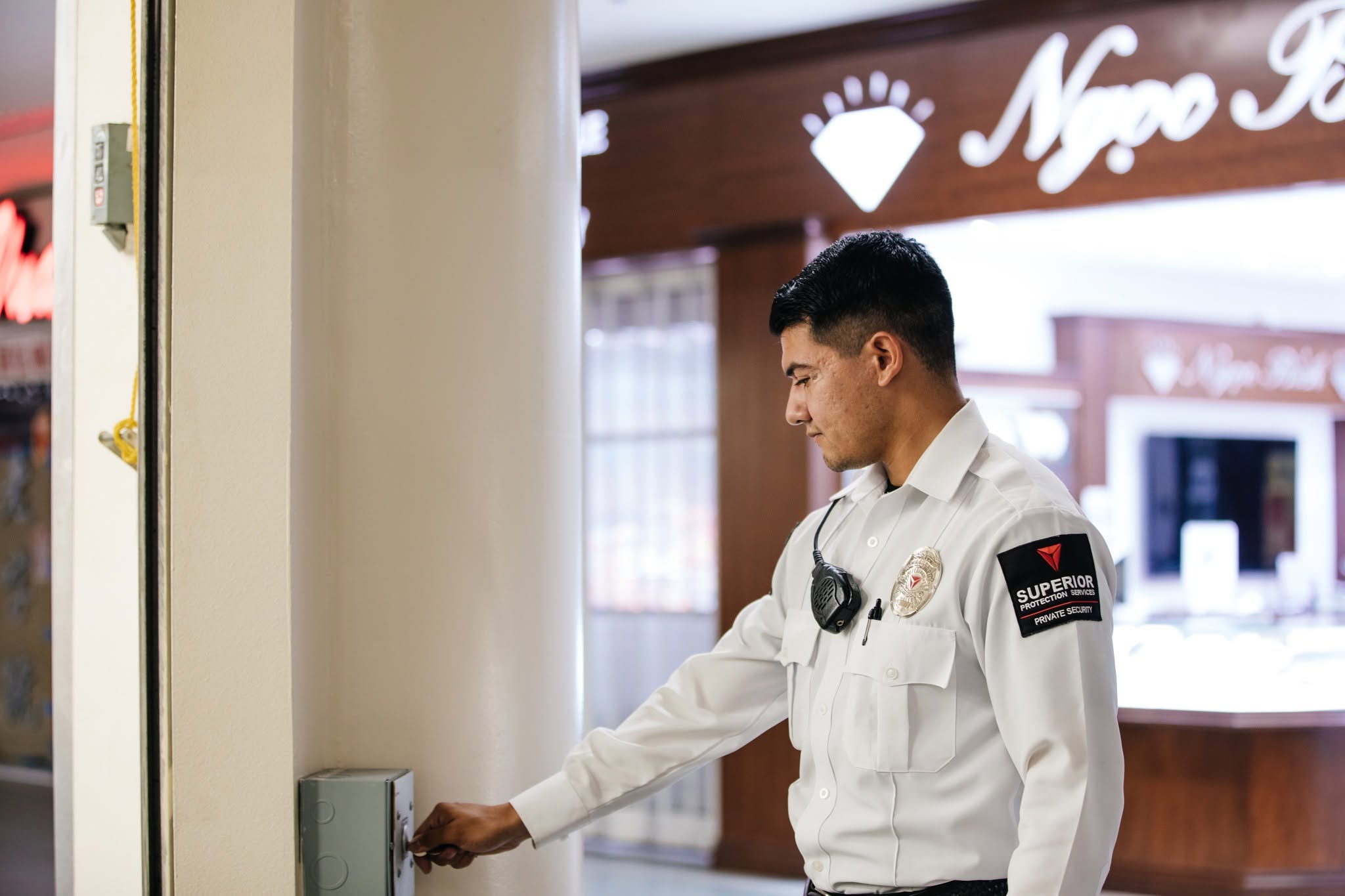
Security guards handling suspected shoplifting must follow company procedures and California law. Their role is generally to observe, verify, deter, document, and respond appropriately. In retail settings, California law allows a merchant or authorized agent to detain a suspected shoplifter for a reasonable time and in a reasonable manner when there is probable cause to believe merchandise was stolen or an attempt was made.
A suspected shoplifting incident can develop quickly, but security guards should avoid acting on assumptions. The first priority is to observe the situation and determine whether there are reasonable grounds to believe merchandise has been taken or an attempt has been made.
BSIS training addresses the limits of security personnel authority, search restrictions, use of force, and the relationship between security personnel and law enforcement.
The guard may monitor the individual’s behavior, merchandise handling, movement through the store, and interaction with checkout areas.
The goal is to gather clear information rather than immediately confront someone based only on suspicion.
Before taking action, the guard should establish whether there is reasonable cause to believe theft occurred or was attempted.
This may involve reviewing what the guard personally observed, checking available surveillance footage, or communicating with store employees.
Security guards should follow the property’s post orders, company procedures, and client instructions.
For businesses looking for broader protection, security guard services can be structured around the property’s specific risks, operating hours, and security requirements.
California’s merchant privilege allows a merchant or its authorized agent, including security personnel, to detain someone when there is probable cause to believe the person has unlawfully taken or attempted to take merchandise.
The detention must be conducted for a reasonable time and in a reasonable manner to investigate the suspected theft.
This is different from simply stopping anyone who appears suspicious. The circumstances and available evidence matter.
A detention should not continue longer than reasonably necessary for the investigation.
If theft is established and criminal charges are being pursued, the individual should be turned over to law enforcement within a reasonable period of time.
Security personnel should also avoid unnecessary confrontation and prioritize safety.
Searches are subject to limitations.
Under California’s merchant privilege provisions, when the applicable conditions are met, a limited and reasonable search may be conducted to recover suspected stolen merchandise. This can include packages, shopping bags, handbags, or other property immediately possessed by the person, but does not include searching clothing.
Guards should not treat a suspected shoplifting incident as permission to conduct an unrestricted personal search.
California law permits reasonable non-deadly force in circumstances covered by the merchant privilege, including protecting people, preventing escape, or preventing loss of property.
However, security personnel should use only the level of force permitted by law, company policy, and the circumstances.
BSIS training includes appropriate use of force, de-escalation, communication, and security officer safety.
Law enforcement may need to become involved when a theft is confirmed, an individual refuses to cooperate, an incident escalates, or circumstances require police assistance.
Security guards are not law enforcement officers. Security personnel should understand their legal authority and the limits of their role when responding to suspected criminal activity.
For businesses in the area, Superior Protection’s Los Angeles security guard services include security solutions for retail businesses, warehouses, commercial properties, and other facilities.
After an incident, the guard should document what happened according to company procedures.
A useful incident report can include:
Accurate reporting gives the property manager and business owner a clear record of what occurred.
Effective retail security is not only about responding after merchandise disappears. Guards can help deter theft through visible presence, customer-service-oriented observation, access control, surveillance monitoring, and timely reporting.
Superior Protection provides retail security solutions that combine trained security personnel with security technology and procedures designed around retail environments.
Businesses can also learn more about loss prevention security programs and how security personnel can support efforts to reduce theft and inventory loss.
At Superior Protection, our retail security services are designed to help businesses address shoplifting, employee theft, inventory loss, suspicious activity, and other security concerns.
Our security personnel can support loss prevention through proactive monitoring, incident response, reporting, and coordination with property management and law enforcement when appropriate.
Superior Protection serves businesses throughout Los Angeles County and surrounding areas with customized security solutions.
If your business is experiencing recurring retail theft or needs a stronger security presence, request a security quote to discuss a security program designed around your property and operational needs.
No. California’s merchant privilege requires the applicable legal conditions, including probable cause, and the detention must be reasonable in time and manner.
Only within the limits established by California law. The merchant privilege provides for certain limited searches of property immediately possessed by the person, but not clothing.
Reasonable non-deadly force may be permitted in specific circumstances, but security personnel must follow applicable law, company policy, and use-of-force requirements.
The incident should be documented, evidence preserved when appropriate, and law enforcement contacted when necessary or when criminal charges are being pursued.