
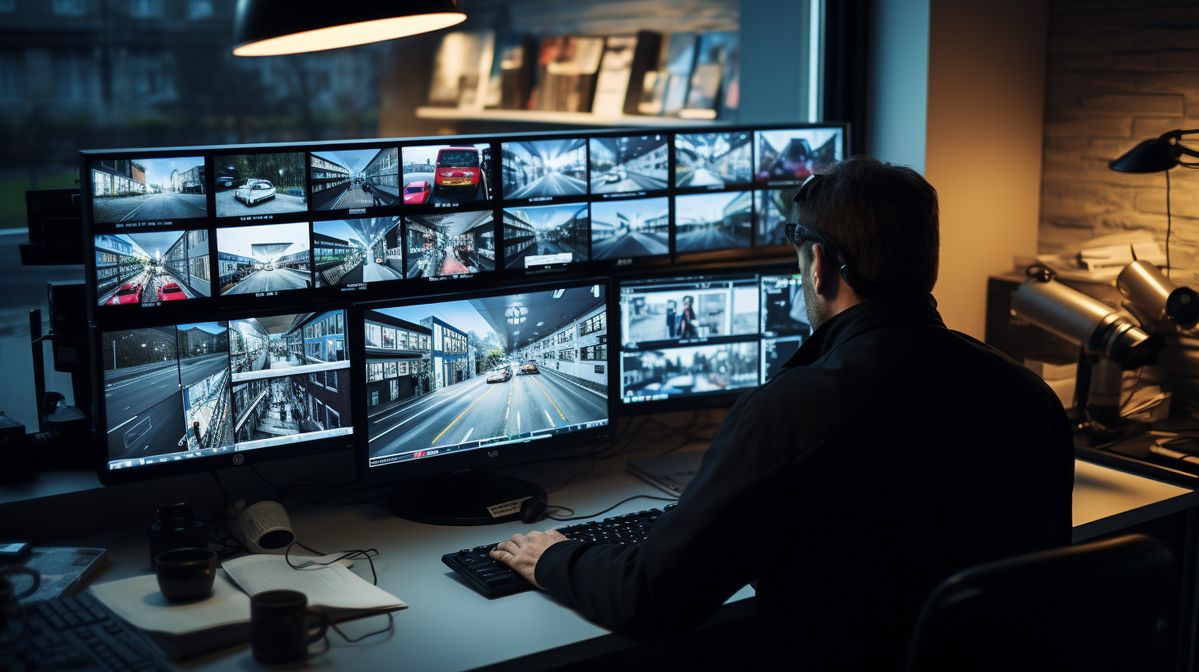
Choosing between remote video monitoring and traditional security systems can feel confusing. Both options use surveillance cameras, but they work very differently. This guide explains how fixed surveillance units compare to traditional security methods, the benefits of each, and how to decide which one makes the most sense for your home or business.
By the end, you’ll have a clear understanding of your options and what level of protection fits your needs best.
Before comparing systems, it helps to have a few basics in place:
Start by defining what you want to protect.
Are you securing a business, a home, or multiple locations?
Focus on key areas like entrances, parking lots, storage areas, or high-traffic zones.
Fixed surveillance units are stationary cameras installed in specific locations. These include IP cameras and traditional CCTV cameras.
They provide constant coverage and are commonly used in both remote video monitoring and traditional systems.
Key features to look for include video quality, night vision, weather resistance, and motion detection.
Don’t look at equipment price alone.
Factor in installation, maintenance, monitoring fees, and long-term costs.
Remote video monitoring usually has lower ongoing costs than traditional systems that rely on on-site staff or outdated equipment.
Some systems are DIY-friendly, but professional installation ensures proper camera placement and fewer blind spots.
Poor placement can make even the best system ineffective.
Remote video monitoring offers tools traditional systems often lack, such as:
These features improve response time and reduce false alarms.
If possible, test the system interface.
Ease of use matters. A system that’s hard to manage often gets ignored.
Choose the system that aligns with your risk level, budget, and need for flexibility.
Many businesses prefer remote video monitoring because it provides 24/7 coverage without the cost of on-site guards.
If issues come up:
What are fixed surveillance units?
They are stationary cameras designed to monitor specific areas continuously.
How does remote video monitoring work?
Cameras send live footage to a monitoring center where trained professionals respond to suspicious activity.
Are traditional security systems still useful?
Yes, but they often lack real-time alerts and remote access.
What affects the cost of fixed surveillance units?
Camera quality, installation, storage options, and monitoring services.
Can I install cameras myself?
Yes, but professional installation usually delivers better coverage and fewer blind spots.
What matters most when choosing a system?
Your risk level, budget, coverage needs, and response time.
Remote video monitoring with fixed surveillance units offers flexibility, real-time alerts, and lower long-term costs compared to many traditional security systems. The best choice depends on your specific needs and how actively you want your property monitored.
At Superior Protection Services, provides professional live video monitoring and fixed surveillance units across Riverside County, Los Angeles County, Phoenix, San Bernardino County, Orange County, Tucson and surrounding areas.
If you want reliable security without the cost of full-time guards, our team can design a solution that fits your business.