
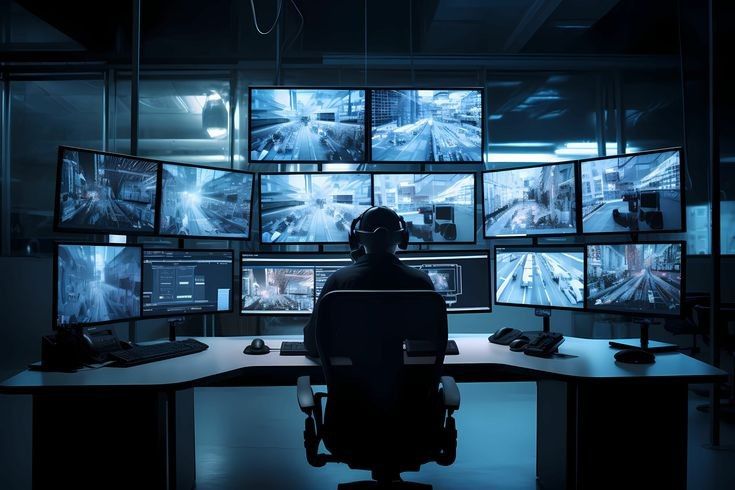
Airports in Los Angeles handle massive daily traffic. At places like Los Angeles International Airport, thousands of passengers, staff, and vehicles move through terminals, parking areas, and restricted zones every hour. With constant activity and frequent changes, relying only on fixed cameras is not enough.
Mobile surveillance units solve this problem by adding flexible coverage where it’s needed most. These systems are portable and typically mounted on trailers, poles, or vehicles. They include high-definition cameras, motion sensors, and remote monitoring tools. Some units also feature night vision, license plate recognition, and solar-powered operation, making them reliable in different conditions.
Because they can be moved quickly, they adapt to changing airport environments without interrupting operations.
Airports have zones that are always crowded. Think of terminal entrances, baggage claim areas, and drop-off points. During peak travel seasons or flight delays, these areas become even more congested.
Mobile surveillance units are often placed in these locations to provide extra visibility. For example, during holiday travel rushes, airports may deploy additional units near entrances to monitor crowd flow and detect suspicious behavior in real time.
This added coverage helps security teams stay aware of what’s happening and respond quickly if something looks off.
Airports are constantly evolving. Construction projects, temporary security checkpoints, and layout changes can create areas that fixed systems don’t cover well.
Installing permanent cameras in these spots isn’t always practical. That’s where mobile units come in. They can be deployed quickly to cover new or temporary gaps.
For example, if a terminal is under renovation, a mobile unit can monitor restricted construction zones and prevent unauthorized access. Once the project is done, the unit can be moved elsewhere.
Speed matters in airport security. When an issue comes up—like a suspicious package, unauthorized entry, or traffic overflow—security teams need immediate visibility.
Mobile surveillance units can be relocated and activated fast. Teams can position them near the incident and begin live monitoring within minutes. This allows airport security and law enforcement to track the situation closely and coordinate their response.
The ability to move surveillance exactly where it’s needed helps reduce response time and improve overall control.
Mobile systems offer several practical advantages:
These benefits make them a strong addition to any airport security strategy.
Fixed cameras are essential for long-term coverage. They provide consistent monitoring in stable areas like terminals and security checkpoints.
But they have limits. They can’t be easily moved when layouts change or when new risks appear.
Mobile surveillance units fill that gap. They offer temporary, targeted coverage where fixed systems fall short. Instead of replacing permanent cameras, they work alongside them to create a more complete security setup.
Airports in Los Angeles operate on a large scale and deal with constant movement. High passenger volume, international travel, and ongoing upgrades make security more complex.
Mobile surveillance units help extend coverage without slowing down operations. Airports can increase monitoring during busy travel seasons, major events, or construction periods, then scale back when demand drops.
They also act as a visible deterrent. When people see active surveillance in place, it reduces the chances of suspicious or unwanted behavior.
Mobile units are especially useful during:
In these situations, flexibility is critical. Mobile systems allow airports to adjust quickly without making permanent changes.
At Superior Protection Services we provide professional mobile surveillance unit solutions for businesses across Riverside County, Los Angeles County, Phoenix, San Bernardino County, Orange County, Tucson and surrounding areas.
Our mobile surveillance systems are designed to deter crime, reduce losses, and protect high-value properties—day and night—without the delays and expense of permanent infrastructure.